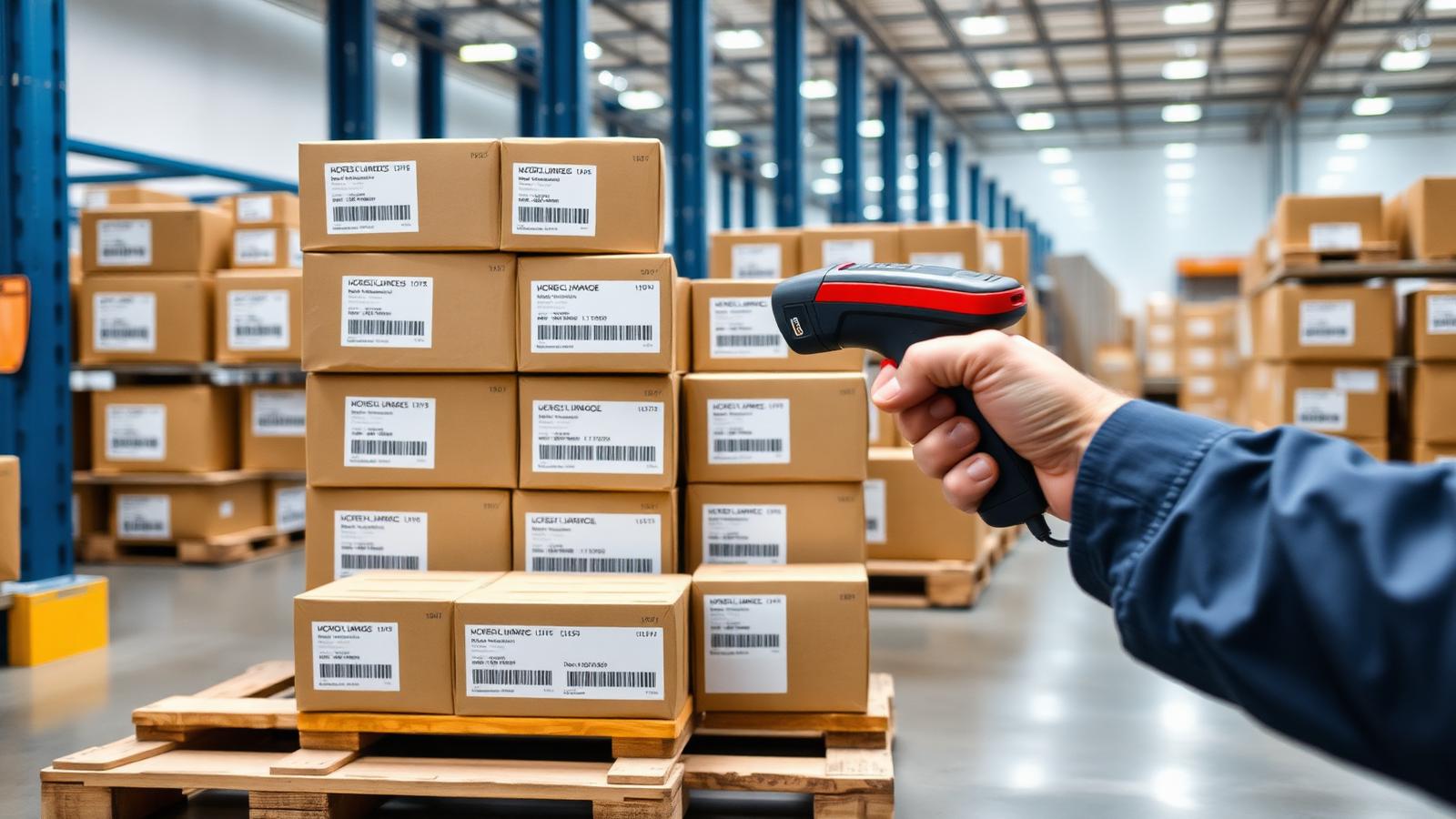
Track-and-trace under DSCSA depends on one thing happening reliably millions of times: a package's product identifier gets read correctly at every node. The data infrastructure gets most of the attention. The read rate is decided by the label.
This post covers when pre-printed serialized labels make sense, how they reduce risk compared with printing everything on the line, and what to specify so a reprint does not eat the savings.
What Are Pre-Printed Serialized Labels?
A pre-printed serialized label arrives at your facility already carrying the fixed artwork and, when the workflow calls for it, the serialized product identifier itself: the NDC, serial number, lot, and expiration data encoded in a 2D DataMatrix with matching human-readable text.
There are three common models:
| Model | What is printed off-line | What happens on the line |
|---|---|---|
| Fully pre-printed serialized | Artwork plus the full serialized product identifier | Apply and verify, commission the serial numbers into your system |
| Hybrid | Artwork, regulatory copy, layout, and clear areas | Variable serialized data printed and verified in line |
| Fully in-line | Nothing | Artwork and variable data printed together at application |
Why Print Serialized Data Off the Packaging Line?
Press conditions beat line conditions. A press runs in a controlled environment with tight registration and consistent ink or ribbon behavior. A thermal printer on a packaging line contends with dust, temperature swings, vibration, printhead wear, and operator darkness adjustments. Every one of those degrades a dense DataMatrix. Quality control happens before the product exists. A pre-printed label can be inspected, graded, and rejected before it is ever applied to saleable product. A code that fails in line means an investigation on packaged goods. Line throughput and simplicity. Fewer printers on the line means fewer stoppages, fewer consumables to manage, and less print-quality troubleshooting during a run. Fixed artwork stays fixed. Regulatory copy, layout, and the clear area around the barcode are locked into a plate or a proofed digital file rather than re-rendered per label.The trade-off is real: pre-printed serialized labels require tight number-range control, secure handling, strict reconciliation, and disciplined inventory management. A roll of serialized labels is controlled material, not stationery.
Where Reprints and Compliance Gaps Actually Come From
Reprints are expensive because they arrive late, at volume, and often after the product is packaged. The usual triggers:
| Trigger | Why it happens | How to avoid it |
|---|---|---|
| Barcode fails verification in distribution | Symbol too small, too dark, or printed on the wrong facestock | Verify grade on the actual construction at the actual module size before release |
| Quiet zone squeezed out | Layout revision moved artwork closer to the code | Build the clear area into the die line and template |
| Adhesive fails at application | Adhesive not rated for a chilled or low-energy substrate | Qualify the adhesive at real application conditions, see label construction |
| Human-readable data does not match the encoded data | Template mapping error between fields | Include a data-integrity check in proofing and in line verification |
| Obsolete pre-printed stock | Artwork, NDC, or expiration format changed | Order to a burn-down plan, especially ahead of the NDC-12 transition |
| Material substitution on reorder | A facestock or adhesive changed without notice | Lock exact material part numbers in the specification |
What to Specify When You Order Serialized Labels
- Container and substrate. Material, geometry, and diameter, plus whether the surface is chilled, wet, or wiped down.
- Environment. Storage temperature, application temperature, humidity, light exposure, and expected handling.
- Construction. Face stock, adhesive, and liner by exact part number, plus the print process.
- Barcode parameters. Symbol type, module size, target grade, quiet zone, and placement relative to die-cut edges and folds.
- Data structure. Field order, GS1 application identifiers, and how the human-readable block mirrors the encoded data.
- Serial number handling. Range assignment, reconciliation, secure destruction of rejects, and how the ranges are transmitted.
- Inspection. Grade sampling plan at the press, and the release criteria you expect to see.
- Inventory plan. Order quantities and reorder points that keep pre-printed stock from becoming obsolete.
Bring that list to a labeling partner and most late-stage surprises disappear.
How Country Innovation & Supply Supports Track-and-Trace
CIS is a labeling and materials expert, not a regulatory authority. We support the physical layer of your track-and-trace program:
- Pre-printed serialization and labeling solutions built to support DSCSA track-and-trace requirements, so the codes your systems depend on are printed and inspected under controlled conditions.
- Adhesive, face stock, and print method matching for pharmaceutical applications, including cold chain, glass vials, and small-diameter containers.
- Durable, scannable label construction that holds up in real supply-chain conditions, plus practical inventory planning so a change does not leave you with scrap.
Whether you are moving from in-line printing to pre-printed labels, or troubleshooting scan failures on a current construction, our team can work through it with you.
Talk to the CIS team about serialized labeling or explore industrial label capabilities._Talk to a real person in minutes, no bots, no delays._