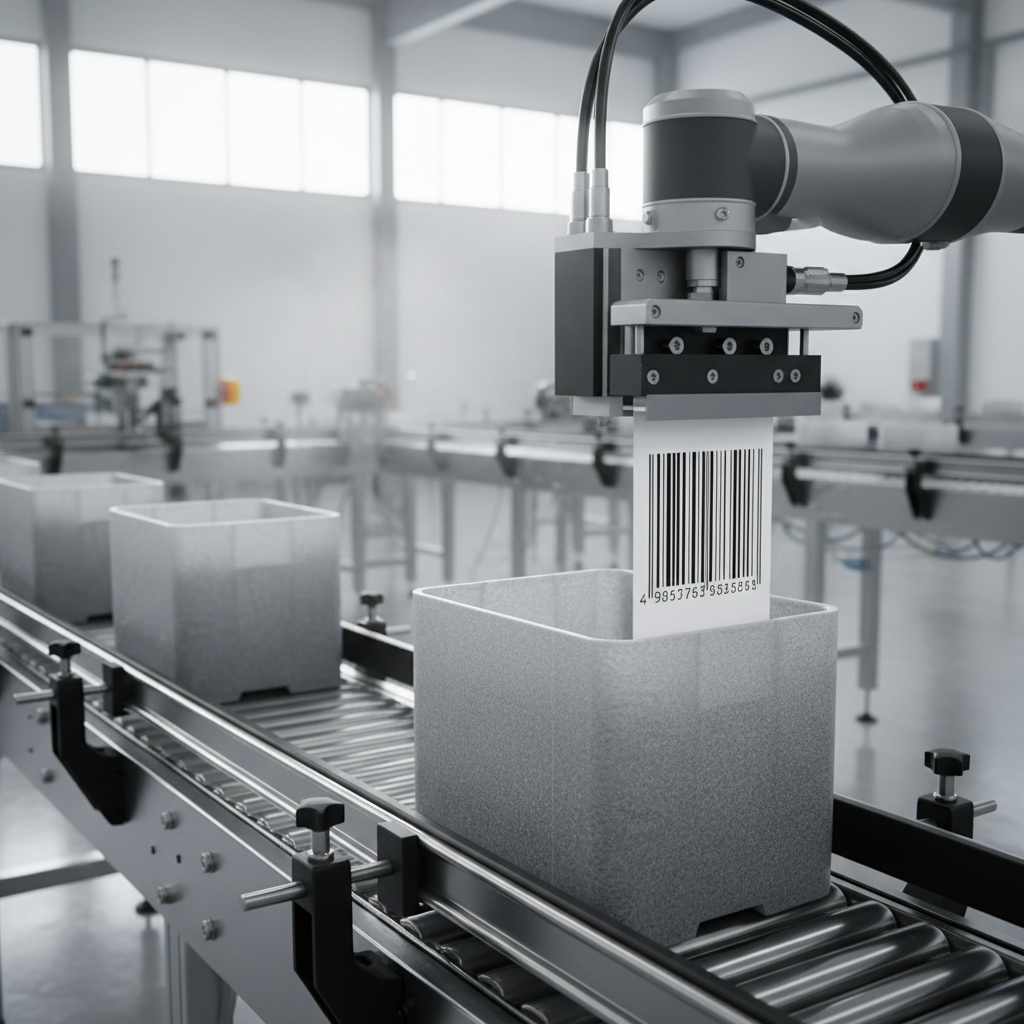
When a barcode label lifts at the edge or curls off a tote, the issue rarely stays small. A scanner at the dock misses a read, an operator has to stop the line for manual entry, or an entire pallet gets flagged for rework during final audit. In severe cases, an unreadable lot code can lead to rejected customer shipments. Most plant managers and label buyers treat peeling labels as an occasional annoyance, but chronic edge lift is almost always a sign of a mismatch between the label material, the adhesive, and the plant environment.
Fixing these problems does not require overhauling your entire packaging process. It requires understanding what happens at the surface level when a label meets your containers, cases, or equipment.
Surface Energy: Why All Plastics Are Not Created Equal
One of the most common reasons labels fail in industrial and food packaging is a misunderstanding of surface energy. Adhesives work by flowing out and wetting the surface of the container. High surface energy materials like bare steel, glass, and certain rigid plastics make this easy. The adhesive spreads readily, creating a strong mechanical bond.
The trouble begins when plants apply standard labels to low surface energy plastics. High-density polyethylene (HDPE) drums, polypropylene bins, and low-density polyethylene stretch wrap actively resist adhesive wet-out. When an all-purpose acrylic adhesive cannot flow into the microscopic pores of these plastics, the label sits on top of the surface rather than bonding with it. The inherent memory of a stiff paper or synthetic facestock then pulls against the weak bond, causing the label to pop up at the corners.
If your facility runs corrugated boxes, slick plastic jugs, and coated metal parts through the same packing area, a single standard label adhesive will struggle to perform across all of them. Specifying a high-tack rubber adhesive or a specialized emulsion acrylic designed for low surface energy substrates can eliminate edge lift on difficult plastics immediately.
Environmental Stress: Moisture, Freezers, and Washdowns
Food and beverage operations present a different set of challenges. In these plants, a label might be applied in an ambient pack-off room, move into blast freezing, and later encounter heavy condensation during transport.
Moisture is the natural enemy of poorly matched adhesives. Standard water-based adhesives can break down when exposed to ambient moisture or sweat on cold bottles and jugs. In sub-zero storage, general-purpose adhesives harden, become brittle, and lose their tack completely, causing labels to fall right off the rack or tote.
Freezer-grade labels, engineered to apply at temperatures as low as -10 degrees Fahrenheit, use specialized adhesives that remain pliable and aggressive under freezing conditions. Beyond the adhesive, moisture requires careful facestock selection. Standard paper facestocks absorb moisture, which leads to bubbling, curling, and edge separation. Switching to a durable film facestock, such as polypropylene or polyester, keeps the label intact through temperature swings and routine sanitation washdowns.
Ribbon and Facestock Pairing: Protecting Scannability
Adhesion is only half the battle. A label that stays stuck to the container is still a failure if the barcode cannot be read by an overhead scanner or hand scanner. Barcode readability failures typically stem from two sources: rough handling or poor thermal ribbon matching.
Thermal transfer printing relies on heat from the printhead to melt ribbon ink onto the label face. If you use a basic wax ribbon on a synthetic film label, the ink sits on the surface without bonding. A single pass down a roller conveyor or light contact from a forklift mast can smudge the barcode, ruin quiet zones, and turn a crisp GS1 barcode into an unscannable mess.
To avoid smearing, industrial operations pair their materials based on mechanical wear and chemical exposure:
* Wax ribbons work well for standard paper shipping labels on corrugated cartons where handling is minimal.
* Wax-resin ribbons provide excellent scratch and smudge resistance on coated papers and mid-tier synthetic labels, making them ideal for warehouse bin tags, tote tracking, and parts packaging.
* Full resin ribbons offer extreme durability against heat, industrial solvents, oils, and harsh washdowns, particularly when paired with polyester or specialty films.
Matching the ribbon chemistry to your facestock ensures that your print holds up from the moment it leaves the printhead at speeds up to 16 inches per second until it reaches the final customer.
How to Audit Your Plant Label Performance
If your operations team spends too much time relabeling containers or resolving scanner errors, run a quick floor audit:
- Inspect the failure point. If the adhesive remains on the container while the paper tears away, you have a facestock strength issue. If the adhesive peels cleanly away from the container with no tack left behind, the adhesive chemistry does not match the surface energy or application temperature.
- Check your dwell time. Pressure-sensitive adhesives need time and firm initial pressure to build their ultimate bond. If containers move straight from application into a blast freezer or humid cooler within seconds, the adhesive may not have had sufficient dwell time to set.
- Check application cleanliness. Fine dust from corrugated cardboard, residual machine oil, or light condensation will create a barrier that prevents proper contact. Even the strongest adhesive cannot bond to a layer of loose dust.
Getting label specifications right does not have to be an exhausting research project. You can explore our ready-to-ship Stock Thermal Transfer Labels to find reliable paper and synthetic options built for everyday industrial operations. When you have an unusual substrate or a tough plant environment, you can always pick up the phone and talk directly to our team. We keep substantial inventory in U.S. warehouses, which means you talk to a real person who understands line downtime and can ship your rolls without delay.
Did you know that pressure-sensitive adhesives technically never dry? Unlike water-based glues that cure through evaporation, the adhesive on your industrial roll labels remains a permanent viscoelastic solid, balancing the flow of a thick liquid with the elasticity of a solid for its entire working life.