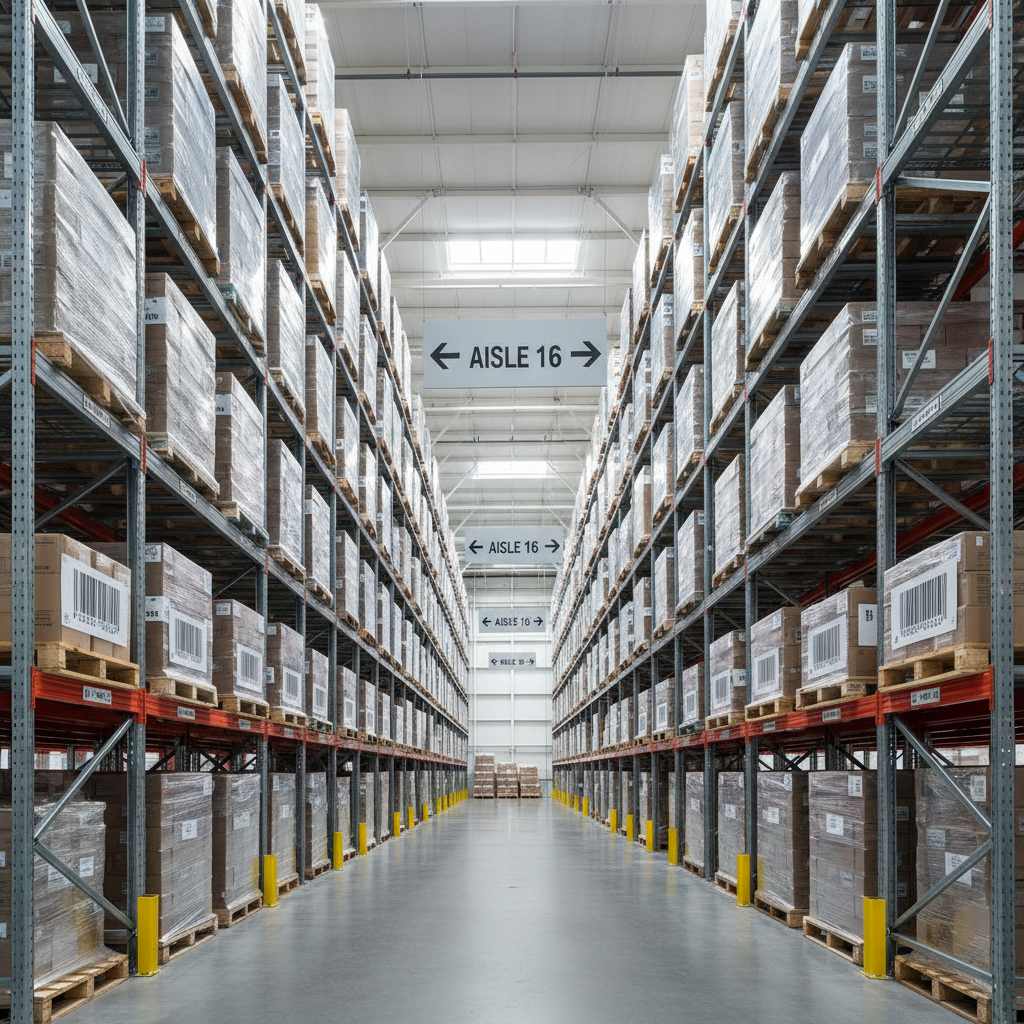
Every distribution center supervisor knows the dread of hearing a picker say, "I know the system says bin 42, but we actually keep those parts by the packing station." When warehouse locations rely on tribal knowledge instead of a logical numbering convention, pick times climb, replenishment stalls, and training a temporary worker takes weeks instead of hours. Turning a cavernous facility into a searchable, intuitive physical grid is one of the highest-leverage projects an operations team can tackle. Getting it right requires three things working together: an intuitive numbering architecture, durable label media matched to your environment, and an execution plan that avoids shutting down the floor.
Build an Address Structure That Works for Humans and Scanners
A dependable location code functions exactly like a residential mailing address. If you tell someone to find a package at an apartment building, they need the city, street, building number, floor, and unit. In a distribution center, that hierarchy translates cleanly into zone, aisle, bay, level, and position.
For most facilities, a standard five-element alphanumeric format delivers the clarity teams need:
* Zone (Optional for smaller sites): A single letter indicating functional areas like dry storage, bulk reserve, mezzanine, or cold storage.
* Aisle: Two digits (01 to 99). Using two digits keeps sorting clean in your warehouse management system.
* Bay: Two digits representing the rack section between uprights, counting upward from the main cross-aisle.
* Level: A letter or number denoting shelf height, typically starting at A or 01 for the ground pick level and moving up.
* Position: One or two digits indicating individual bin or pallet spots on that beam, moving left to right.
Under this setup, location code 04-12-C-02 instantly tells an operator: Aisle 4, Bay 12, Shelf Level C, second position from the left. Continuous improvement leads often debate whether to count levels top-down or bottom-up. In almost all pallet and pick racking, counting bottom-up is superior because it allows you to add higher beam levels later without renumbering your entire ground floor.
Match Label Construction to Your Physical Racking
Designing the code on a spreadsheet is the simple half. The real headache begins when operations managers realize their physical racking was not built for standard paper labels. Beams get battered by forklifts, cold rooms collect frost, and high-bay locations require operators to step out of their equipment just to scan an upper tier.
To keep inventory moving smoothly, you need materials suited to the specific physical stress of each bay:
* Damaged and Flaking Beams: Racks that have seen years of label scraping leave behind crusty adhesive that prevents new labels from sticking flat. Covering scarred crossbeams with an engineered overlay like CleanBeam creates a fresh, color-matched surface. Labels applied over it adhere securely yet peel away cleanly when slotting changes, completely eliminating magnetic labels or scrapers.
* Multi-Level Upright Totems: Scanning upper pallet levels from ground level can cause neck strain and slow down reach truck operators. Grouping those upper barcoded locations onto a vertical or horizontal totem label at the bottom upright lets drivers scan upper levels without leaving their seats.
* Long-Range Retro-Reflective Media: When pickers use extended-range scanners from an order picker or forklift, retro-reflective wrap-around labels bounce the beam back reliably from 30 or 40 feet in the air.
* Cold and Deep-Freeze Storage: Standard adhesives fail and drop off beams in cold storage. Freezer-grade adhesives engineered to apply at temperatures as low as -10 degrees Fahrenheit ensure you are not re-labeling cold bays every winter.
* High-Traffic Floor Bulk Locations: Pallet staging on the floor quickly shreds standard vinyl markers. Heavy-duty floor label frames or clear protective shields like Label Armor protect floor barcodes against pallet drags and tire scrub.
Structure Your Data File for Zero-Error Production
Once you settle on your location schema, the next pitfall is data handoff. Printing thousands of variable-data warehouse labels requires a clean file structure. A single shifted column or transposed digit can throw off an entire aisle.
A reliable variable-data file is best organized in a simple CSV or Excel spreadsheet. Keep your barcode data in column one and your human-readable text in column two if they differ. If you are using upright totem labels with directional arrows pointing to specific rack levels, encode those arrow directions directly into the data sheet using simple single-letter flags (such as U for up, D for down, L for left, and R for right).
When facility drawings or CAD files exist but no location list is ready, partner with a labeling team that can extract your rack layout directly from floor blueprints. Building the data matrix directly from rack elevations prevents missing bays and ensures your printed label rolls arrive sequenced exactly how your installation crew walks the aisles.
Execute the Rollout Without Halting Operations
Re-labeling a live facility is open-heart surgery on your supply chain. You cannot freeze inbound receiving or customer shipping for a week while people climb scissor lifts with heat guns.
Successful rollouts happen in phases:
- Map Aisle by Aisle: Complete physical prep work, including beam cleaning, overlay application, and hanging overhead aisle signs, during scheduled low-volume shifts.
- Verify WMS Parity: Run a test bay in your software to confirm that your barcode format, symbology (typically Code 128 or Data Matrix), and check digits scan cleanly on your current RF guns and mobile computers.
- Coordinate Turn-Key Installation: Many operations teams attempt to install thousands of labels using in-house maintenance technicians or warehouse associates. It almost always pulls key staff away from pick lines and drags out over months. Using an experienced on-site installation crew that brings its own equipment, lifts, and dedicated project manager ensures thousands of locations can be converted over a single weekend with guaranteed scan accuracy.
If you are planning an aisle reconfiguration, expanding into a new building, or refreshing beat-up racks, exploring turnkey Warehouse Labeling solutions from Country Innovation & Supply gives you access to durable U.S.-stocked materials, custom data preparation, and full on-site installation support. We put a real project manager on the phone with you from your first CAD drawing to the final scan check.
An Operations Fact to Consider
Did you know that standard warehouse order picking accounts for roughly 50 to 55 percent of total operating costs in a typical distribution center? Studies in material handling consistently show that travel time makes up over half of that picking duration. When every bay has a clear, standardized location code, pickers spend less time searching and more time moving product out the door. Is your current location scheme helping your team hit their pick rates, or is it quietly costing you hours every shift?