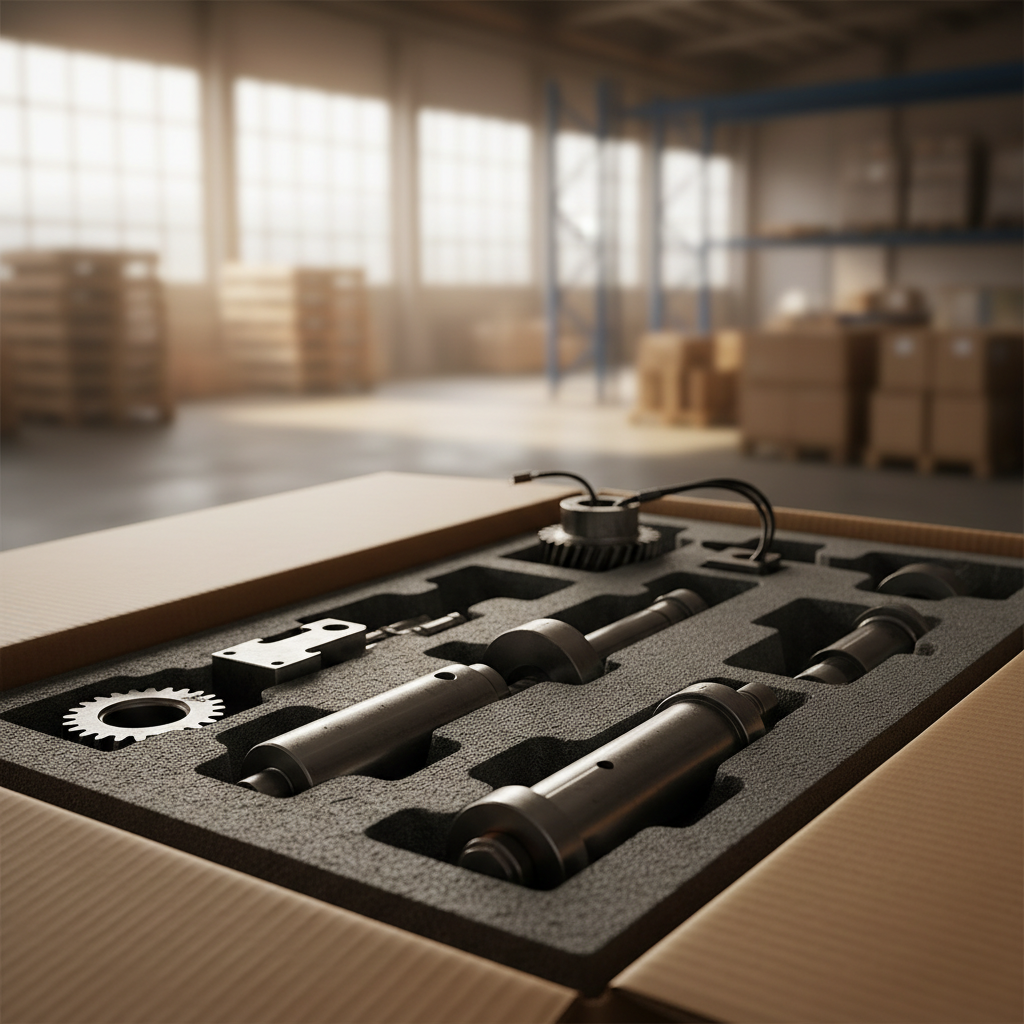
We’ve all been there: a package arrives, and something inside is damaged. For a consumer, it's annoying. For a business shipping industrial components or delicate machinery, it’s a costly problem. Damaged shipments lead to returns, LTL freight claims, reshipment costs, and, worst of all, a hit to your customer's trust and your company’s reputation. If you're in shipping, fulfillment, or packaging engineering, you know the frustration firsthand. It's not just about the material you use, it's about the entire protective packaging system.
Many operations leaders think of protective packaging purely in terms of the materials themselves: the bubble wrap, the foam, the void fill. And while those materials are crucial, the real challenge lies in how they perform as a system under the constant stress of modern supply chains. Your products might encounter six to eight touchpoints in a standard Less-Than-Truckload (LTL) shipment, each one an opportunity for impact, vibration, or compression. What if your current packaging isn't designed to withstand that gauntlet?
The Hidden Costs of Inadequate Packaging
The impact of damaged goods goes far beyond the immediate cost of replacing a broken item. Think about:
* Financial Drain: Replacement product costs, shipping charges for returns and reshipments, administrative time spent on claims, and potential rush order fees to satisfy an unhappy customer.
* Operational Headaches: Your team diverting resources from productive tasks to manage claims, inspect returns, and re-pack items. This slows down your entire operation.
* Reputation Damage: A customer receiving a damaged product isn't just disappointed; they might question your quality control, your reliability, and ultimately, whether to do business with you again. In today's interconnected world, negative experiences can spread quickly.
* Reduced Efficiency: If your packing lines are constantly having to "overpack" or deal with packaging failures, it slows down throughput and reduces overall efficiency.
These costs, often unseen in daily operations, can significantly erode your profit margins and damage customer relationships.
Beyond the Material: Engineering a Packaging Solution
So, if it’s not just about the bubble wrap, what is it about? It’s about understanding the journey your product takes and engineering a packaging solution to survive it. This involves:
- Product Assessment: What are you actually shipping? Is it fragile, heavy, oddly shaped, or a combination? What are its critical points that need protection? High-value electronics have different needs than industrial valves.
- Transit Environment Analysis: How will it be shipped? Parcel, LTL, full truckload, international container? Each mode introduces different stresses: drops, vibrations, compression, and handling points. An LTL shipment, for example, demands packaging that can withstand multiple transfers and stacking.
- Material Selection & System Design: This is where the specific materials come in, but now chosen strategically.
* Cushioning: Protecting against shock and vibration. Foam, bubble wrap, or even specialized molded pulp can absorb impacts.
* Blocking and Bracing: Securing heavy or irregularly shaped items within the package to prevent shifting, which can cause damage to both the product and the outer box.
* Surface Protection: Preventing scratches, abrasions, or moisture damage with films, papers, or specific wraps.
* Outer Container Strength: Don't overlook the box itself. Standard catalog boxes might not be sufficient for heavy industrial parts or multi-stop LTL shipments. Heavy-duty double-wall or even triple-wall corrugated boxes might be necessary to prevent crushing or punctures.
- Testing and Validation: Before you roll out a new packaging design, ideally it should be tested. Can it survive a drop? How does it handle vibration? Does it maintain integrity under compression? Real-world testing or simulated lab tests can save you a lot of grief (and money) down the line.
Partnering for Smarter Packaging
The goal isn't just to buy packaging materials; it's to invest in a packaging strategy that reduces damage, improves operational efficiency, and protects your bottom line. We’ve seen firsthand how a small investment in better packaging can yield significant returns by cutting down on claims and boosting customer satisfaction.
At CIS, we understand that every manufacturing and distribution operation is unique. There's no one-size-fits-all solution. That's why we don't just sell products; we work with you to understand your specific challenges and recommend solutions that make sense for your environment and your budget. We stock a wide range of packaging materials right here in the U.S., which means you can get what you need, when you need it, often without the delays you might experience elsewhere. And when you call us, you get a real human, ready to help.
Don’t let damaged shipments erode your profits or reputation. Explore our range of packaging materials and solutions that can help you fortify your supply chain. You can find more information about our offerings at https://innovationandsupply.com/products/packaging-materials.
What single change to your current packaging process could have the biggest impact on reducing damage?