In the fast-paced world of manufacturing and distribution, every decision about your operations impacts efficiency and cost. When it comes to packaging, two terms often get used interchangeably, causing confusion: shrink wrap and stretch film. While they both involve plastic film and protection, they are far from the same. Making the wrong choice can lead to unstable loads, damaged goods, or unnecessary expenses.
For shipping, fulfillment, and packaging engineering professionals like you, understanding the distinct roles of these materials is crucial. It is about more than just plastic. It is about product integrity, shipping stability, and ultimately, your bottom line. Let us cut through the noise and clarify the key differences, so you can confidently select the right solution for your specific needs.
Why the Confusion? They Look Similar, But Are Very Different
At first glance, both stretch film and shrink wrap might appear to be interchangeable rolls of plastic film. However, their fundamental properties, how they are applied, and the problems they solve are entirely different. Think of them as specialized tools in your packaging arsenal, each designed for a particular job.
The core distinction lies in their application and how they secure items. One relies on tension, the other on heat. This difference dictates everything from equipment needs to the type of product they are best suited to protect. Ignoring these differences can lead to inefficiencies, product damage, and rework.
Stretch Film: Your Pallet's Best Friend
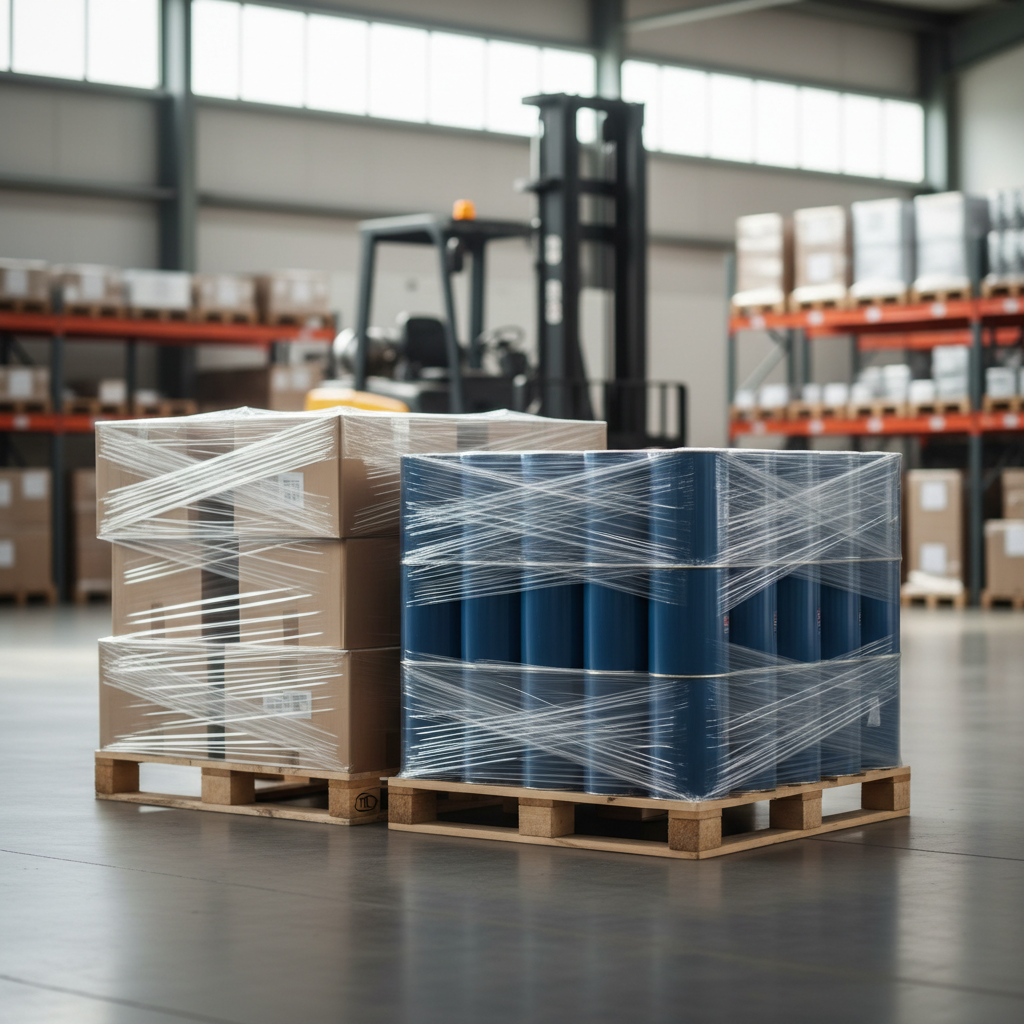
Stretch film, often called stretch wrap, is designed for securing and unitizing multiple items onto a pallet. Its primary function is to keep a load stable during storage and transit.
Here is how it works:
* Elasticity and Tension: Stretch film is highly elastic. When applied, it is stretched and wrapped tightly around a palletized load. This tension compresses the items, binding them together.
* Load Containment: Its main purpose is to contain and stabilize a large, often heavy, collection of boxes or products on a pallet. This prevents shifting, tumbling, and damage during transportation.
* Application: It is typically applied using a stretch wrapper machine, which can be semi-automatic or automatic, or manually with hand applicators. No heat is required.
* Common Uses: Ideal for warehouse palletizing, shipping large quantities of goods, and preventing individual packages from separating on a pallet. It helps to protect against dust, moisture, and tampering during transit.
When you see a pallet of finished goods leaving a warehouse, securely bound and ready for its journey, you are almost certainly looking at stretch film in action. It is about keeping the entire load as one cohesive unit.
Shrink Wrap: Product-Level Protection and Presentation
Shrink wrap, on the other hand, is all about individual product protection, bundling, and presentation. It creates a tight, protective seal around one or more items.
Here is its process:
* Heat Activated: Unlike stretch film, shrink wrap requires heat to activate its shrinking properties. The film is loosely placed around an item, and then heat is applied, causing the film to shrink tightly around the product's contours.
* Conforming Seal: This creates a snug, often clear, protective barrier that conforms to the shape of the item or bundle.
* Application: Applied with heat guns, shrink tunnels, or specialized shrink wrapping machines.
* Common Uses: Frequently used for consumer packaging, bundling multiple retail products together (e.g., multi-packs of beverages), protecting individual items from dust and moisture, and providing tamper-evident packaging.
Think of shrink wrap for items that need to be clean, sealed, and perhaps presented neatly, either individually or in small groups.
Choosing Wisely: Key Considerations for Your Operation
The choice between stretch film and shrink wrap boils down to the specific problem you are trying to solve and the characteristics of your products.
Ask yourself these questions:
- What are you protecting? Is it an entire pallet of diverse boxes, or individual products that need a tight, clear seal?
- What is the goal? Is it load stability for shipping, or tamper-evident protection and presentation for a retail-ready item?
- What equipment do you have or need? Stretch film requires tensioning equipment (manual or automated), while shrink wrap demands heat application equipment.
- What are the environmental factors? Both offer some protection from dust and moisture, but the heat-sealed nature of shrink wrap provides a more complete barrier for individual items.
For many industrial operations, both materials play vital roles in different stages of the packaging process. You might use shrink wrap to bundle smaller items into a multi-pack, and then use stretch film to unitize those multi-packs onto a pallet for bulk shipping.
Understanding the right tool for the job can significantly impact your packaging efficiency and reduce potential damages. It is a critical aspect of optimizing your shipping costs, especially with today's complex carrier surcharges and dimensional weight rules. Every inch and every ounce matters, and correctly secured items are less likely to incur additional fees or suffer damage.
If you are looking to optimize your packaging line with the right materials, our team at Country Innovation & Supply can help. We stock a wide range of packaging materials, including various types of stretch film and shrink wrap, along with the equipment to apply them. Our goal is to ensure you get the practical solutions you need, quickly, with a real human on the phone ready to assist. Explore our full range of packaging materials to find the ideal fit for your unique challenges.
Do you currently use both stretch film and shrink wrap in your operations, or mostly one over the other?