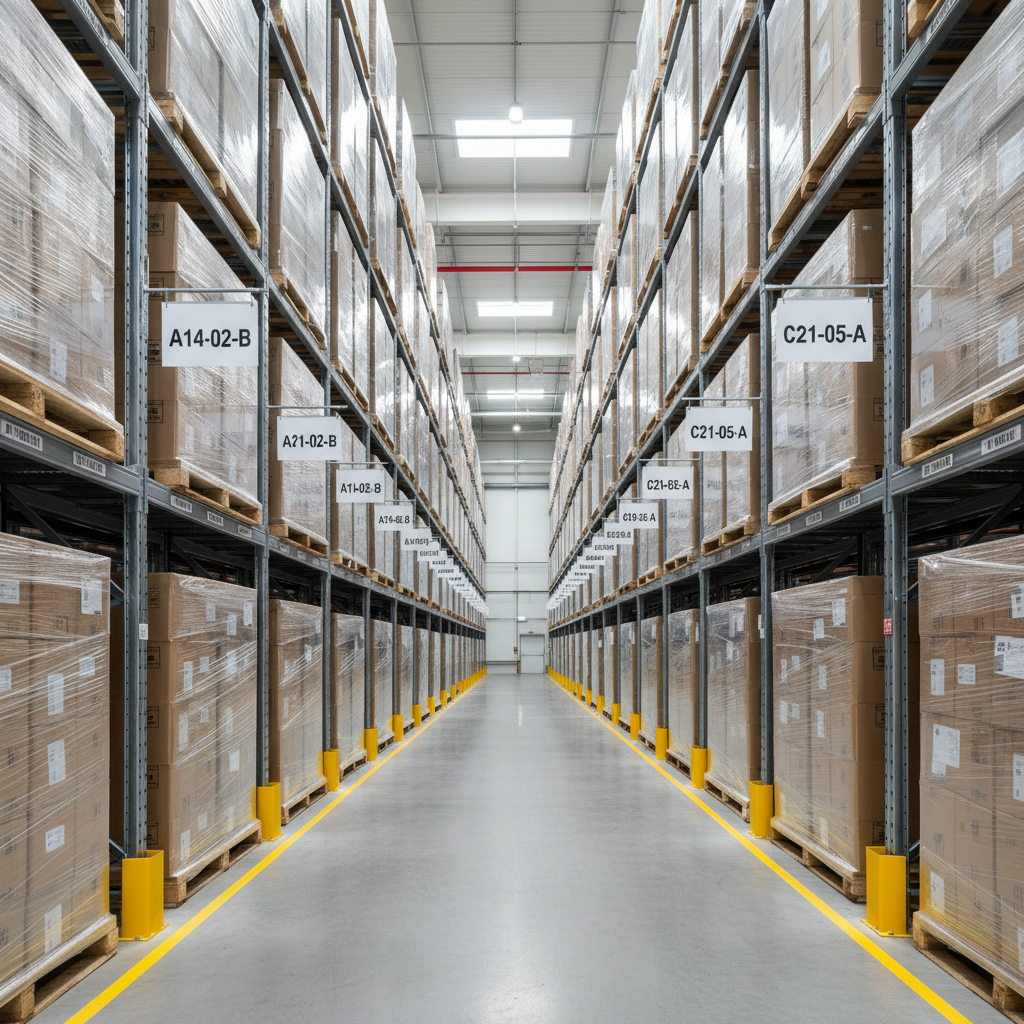
If you walk your distribution center during peak shift, you can usually spot visual friction within five minutes. A lift truck operator taps the brakes at an intersection, craning their neck to confirm an aisle number. A picker steps off a tugger to hand-key a barcode because months of box collisions have shredded the location label on the bottom beam. In modern fulfillment, continuous improvement leads spend weeks shaving seconds off pick paths with software, yet basic physical navigation on the floor often works against them. Clear visual management is not just about passing safety audits or making the facility look neat for corporate tours. It is about keeping product moving without hesitation.
The Hidden Cost of Scraped Beams and Degraded Locations
Every distribution center has rack bays that have seen better days. Over years of slotting changes, operators scrape off old thermal transfer labels, apply new ones, and leave behind gummy residue that attracts dust and cardboard lint. Eventually, new labels will not adhere flat, leading to wrinkled barcodes, misreads, and manual overrides. Some teams switch to heavy magnetic labels to solve the problem, only to see their supply budget climb or watch magnets get knocked askew by pallet loads.
Fixing this does not require replacing expensive steel or dedicating an entire weekend shift to razor blades and chemical solvents. Permanent rack overlays, like CleanBeam, apply directly over damaged beam surfaces and old label scars. They match the existing rack color and create a fresh, durable surface where location labels stick firmly when needed, but peel away cleanly during seasonal re-slotting without leaving adhesive behind. Extending that same approach to pick bins with CleanBin overlays keeps plastic totes and carton flow shelves just as clean. When your rack faces are uniform, scanners lock on instantly, and operators do not lose rhythm wrestling with degraded barcodes.
Building Aisle Navigation Around Forklift Sightlines
Navigating a 200,000-square-foot warehouse should be as intuitive as following highway signage, but sightlines are often an afterthought. Signs mounted flat against end-of-row uprights work fine if an operator is standing directly in front of them, but they disappear the moment a forklift turns out of an active pick path.
Effective wayfinding depends on matching the sign shape to the traffic pattern:
* 45-degree angle signs allow drivers approaching from either direction on a main transfer aisle to identify their turn well before reaching the bay.
* Z-shaped and flat hanging signs help define long, high-bay aisles without creating blind spots for overhead mast cameras or sensor systems.
* Four-sided cubes suspended above staging zones and dock doors provide 360-degree visibility across wide-open floor plans.
High racks bring their own scanning challenges. When lift drivers have to leave the cab or tilt their scanners awkwardly to reach upper levels, cycle times climb and fatigue sets in. Installing multi-barcode totem labels on lower uprights or applying retro-reflective wrap-around labels on upper beam tiers allows operators to scan top locations right from the floor. The operator stays seated, the mast stays down until the target is verified, and picking cadence stays steady.
Protecting Floor Locations from Daily Traffic
Floor bulk-storage locations, cross-dock lanes, and staging lanes face some of the harshest conditions in the building. Between heavy counterbalanced trucks, pivoting drive tires, and dragging wooden pallets, standard vinyl floor tape often shreds in weeks. Once a floor barcode wears away, staging scans fail, inventory visibility blurs, and putaway drivers dump pallets in the wrong block out of frustration.
To keep floor locations reliable, facilities need targeted protection rather than continuous repainting. Heavy-duty protective frames, such as Label Armor overlays in half-letter or full-letter formats, shield the underlying barcode from tire shear and pallet scuffs. Beveled edges prevent pallet forks and scrubbers from catching the corners and peeling the cover up. By keeping the scanned media protected beneath a clear, high-impact polycarbonate window, your floor storage stays just as scannable on day two hundred as it was on day one.
Organizing Variable Data Before Installation Day
Most warehouse sign and label bottlenecks trace back to data prep. A distribution center might have fifty thousand unique storage locations, each requiring a specific combination of human-readable text, barcode encoding, and directional arrows. If the data file is messy, the installation stalls, resulting in missing check digits, incorrect directional arrows, and misplaced bay tags.
When preparing location files, consistency is everything. Standardize your files into simple Excel or comma-delimited CSV formats. Keep barcode data in your primary column, human-readable text in the second, and encode directional arrows clearly using standard single-letter markers like U for up, D for down, L for left, and R for right.
If your engineering team is stretched thin or you are opening a new facility without completed slotting sheets, you do not have to build those files from scratch in a vacuum. CIS works directly from rack elevation drawings and CAD layouts to generate clean data files, fabricate the signs and labels, and provide on-site installation teams with a single project manager dedicated to the job. Having the same team that manufactures your materials oversee the physical deployment means you get accountability from the first spreadsheet to the final torque check on a hanging sign.
Keep Your Visual Controls Working for You
Clear visual indicators do not simply guide material handlers; they prevent the small, compounding delays that drain warehouse productivity. Whether you are re-slotting a cold-storage room with freezer-grade labels that adhere down to ten degrees below zero or overhauling aisle placards across three distribution centers, the physical quality of your markers matters.
If you are seeing hesitation on your pick paths or fighting peeling labels on the racks, explore the full range of CIS Warehouse Labeling solutions. Our U.S. based team has real specialists ready on the phone to help you review rack drawings, select the right label materials, and coordinate installation without bots or delays.
Did you know that the earliest industrial barcode ever scanned in a commercial facility was a pack of chewing gum in 1974, yet today a single modern distribution center can scan more than one million individual rack and parcel barcodes in a single twenty-four-hour shift?