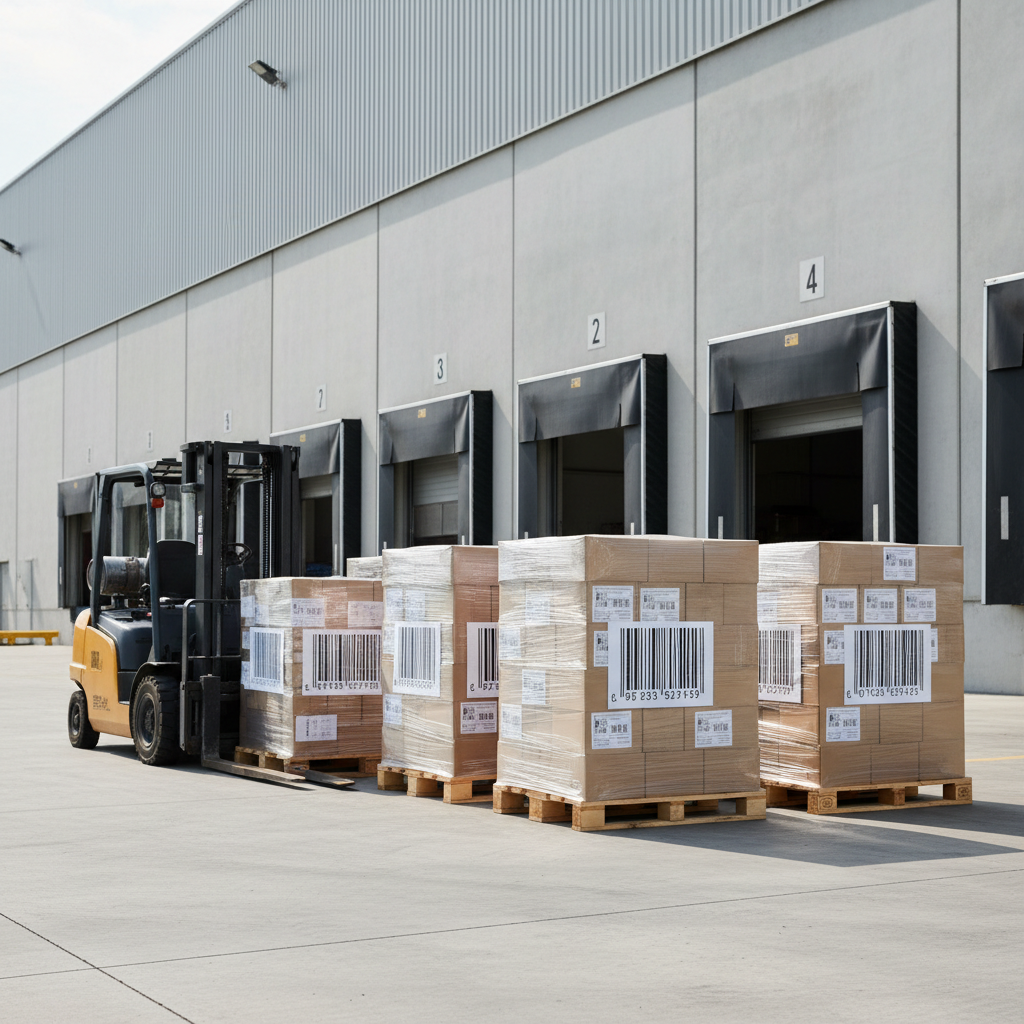
For consumer brands supplying major big-box retailers, vendor compliance is a critical, ongoing challenge. It is not just about getting your product onto the shelves, it is about keeping it there without incurring penalties. Every retailer, from the largest grocery chains to the department store giants, has its own unique set of rules, particularly when it comes to packaging and labeling. Misinterpreting or failing to meet these specific requirements can lead to chargebacks, shipping delays, and strained relationships with your most important retail partners.
The core of many compliance issues often comes down to accurate and properly applied barcodes. Whether it is a UPC on a product, a GS1-128 label on a carton, or an RFID tag on a pallet, these small pieces of information are the lifeblood of retail logistics. When they are incorrect, damaged, or unreadable, the entire supply chain can grind to a halt.
The Cost of Non-Compliance: More Than Just a Fine
You have likely seen or experienced the financial penalties associated with non-compliance. Chargebacks for incorrect labeling, unreadable barcodes, or even using the wrong label stock can quickly erode profit margins. However, the costs go beyond direct fines.
Think about the ripple effect:
* Labor Reallocation: Your team might spend valuable time manually correcting errors, relabeling, or dealing with returned shipments instead of focusing on production or new orders.
* Lost Sales Opportunities: Products held up in receiving due to labeling issues are not on the shelf selling. This can lead to out-of-stocks, frustrated customers, and ultimately, lost revenue.
* Damaged Reputation: Consistent compliance failures can mark your brand as difficult to work with, potentially impacting future orders or negotiations with retailers.
* Operational Inefficiencies: Each hiccup in the supply chain adds extra steps, extra handling, and extra costs that eat into your bottom line.
Understanding the full scope of these costs highlights why proactive barcode and labeling compliance is not just a burden, but a strategic investment.
Decoding Retailer Specifics: It is Not One-Size-Fits-All
The research confirms what many of you already know: every major retailer has distinct requirements. Walmart, Target, Kroger, and other large chains each publish extensive vendor guides covering everything from pallet dimensions to label placement and barcode symbology.
These specifications can include:
* Barcode Type and Symbology: UPC-A for individual items, GS1-128 for cases and pallets, sometimes even specific 2D codes.
* Data Content: The exact information encoded in the barcode, such as GTIN (Global Trade Item Number), lot number, expiration date, and quantity.
* Label Size and Material: Specific dimensions, adhesive types, and durability requirements (e.g., resistance to moisture or abrasion).
* Placement and Orientation: Where the label must be applied on the product, carton, or pallet, and in what direction.
* Print Quality: Minimum acceptable scan rates, often measured by verifiers, to ensure readability throughout the supply chain.
For example, a corrugated box label might require a specific white matte stock with a permanent adhesive, while a freezer-grade product might need a unique synthetic material designed for extreme temperatures. Staying up-to-date with these ever-evolving guidelines is a full-time job for many compliance managers.
Barcode Printing: Consistency is Key
The best label material and placement in the world will not help if the barcode itself is unreadable. This is where your printing equipment and supplies play a crucial role. Many compliance issues stem from:
* Poor Print Quality: Faded, smudged, or improperly contrasted barcodes are a common culprit. This can be due to worn printheads, incorrect ribbon and label stock pairings, or printer settings that are not optimized.
* Incorrect Data: Human error in data entry, or issues with your label design software, can lead to barcodes encoding the wrong information.
* Incompatible Materials: Using a thermal transfer ribbon that is not suited for your direct thermal label stock (or vice versa) results in labels that will not last or will not scan reliably.
Investing in reliable thermal barcode printers, high-quality thermal transfer ribbons, and compatible label stock designed for your specific application helps ensure consistent, scannable labels every time. Regular maintenance and calibration of your printers are also essential.
How to Stay Ahead of the Curve (and Chargebacks)
Navigating big-box retail compliance effectively requires a multi-pronged approach:
- Dedicated Compliance Resources: Have a person or team whose primary role is to understand and implement retailer vendor guides. This includes monitoring updates.
- Robust Labeling Processes: Implement standardized procedures for label design, printing, application, and quality control. This minimizes human error.
- High-Quality Materials and Equipment: Do not cut corners on labels, ribbons, or printers. The small savings up front can lead to huge costs down the line. We help businesses source reliable industrial labels that meet the strict standards of major retailers. Explore our range of industrial labels at https://innovationandsupply.com/products/industrial-labels.
- Regular Audits: Periodically audit your outgoing shipments to ensure labels are correct, properly applied, and scannable before they leave your dock.
- Strong Vendor Partnerships: Work with suppliers who understand industrial labeling and can provide technical support, material recommendations, and responsive service when issues arise.
In the fast-paced world of retail, efficiency and accuracy are paramount. By prioritizing barcode and labeling compliance, you can safeguard your bottom line, strengthen your retail relationships, and keep your products moving smoothly from your facility to the customer's shopping cart.
What is the most common barcode compliance challenge you face when shipping to big-box retailers?